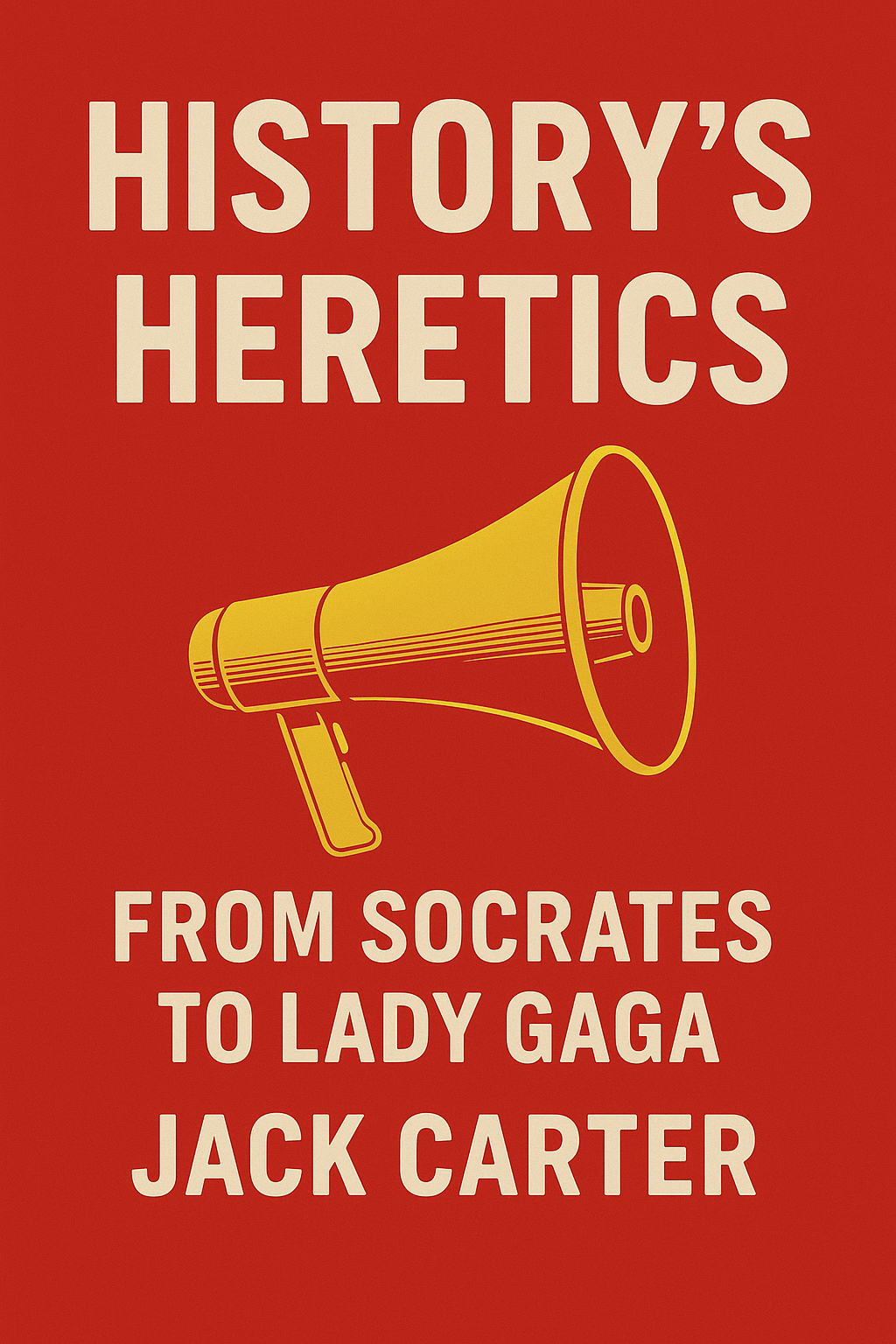
History’s Heretics © 2026 Jack Carter All rights reserved. No part of
this book may be reproduced, distributed, or transmitted in any form or
by any means, electronic or mechanical, including photocopying,
recording, or otherwise without the prior written permission of the
publisher, except in the case of brief quotations used in reviews,
articles, or scholarly works under the doctrine of fair use. Printed in
the United States of America This digital edition is licensed for
individual use only. JackCarterBooks.com

Introduction — What Is a Heretic? The word “heretic” comes from the
Greek word hairetikos, meaning “to choose.” Originally, it wasn’t an
insult. A heretic was simply someone who made a choice—about belief,
philosophy, or truth. But institutions don’t like choosers. They like
followers. They like agreement, repetition, obedience. So over time,
“heretic” became a label. A warning. A punishment. To be called a
heretic meant you had stepped outside the accepted story. Not
necessarily because you were wrong—but because you asked questions that
made people uncomfortable. And history shows a strange pattern: The
people condemned in one era are often celebrated in the next. This book
is about those people. Not saints. Not perfect figures. But individuals
who chose to see, think, or speak differently—and paid a price for it.
Let’s begin at the beginning.